Accident Damage AppraisalMotorhome & Travel Trailer Accident Damage Appraisal
€0.00
Free of charge for you after an accident that was not your fault: the other party’s liability insurer usually covers the cost of the report, and on request we bill them directly. If liability is shared or yours, we agree the cost with you in advance. All prices incl. VAT.
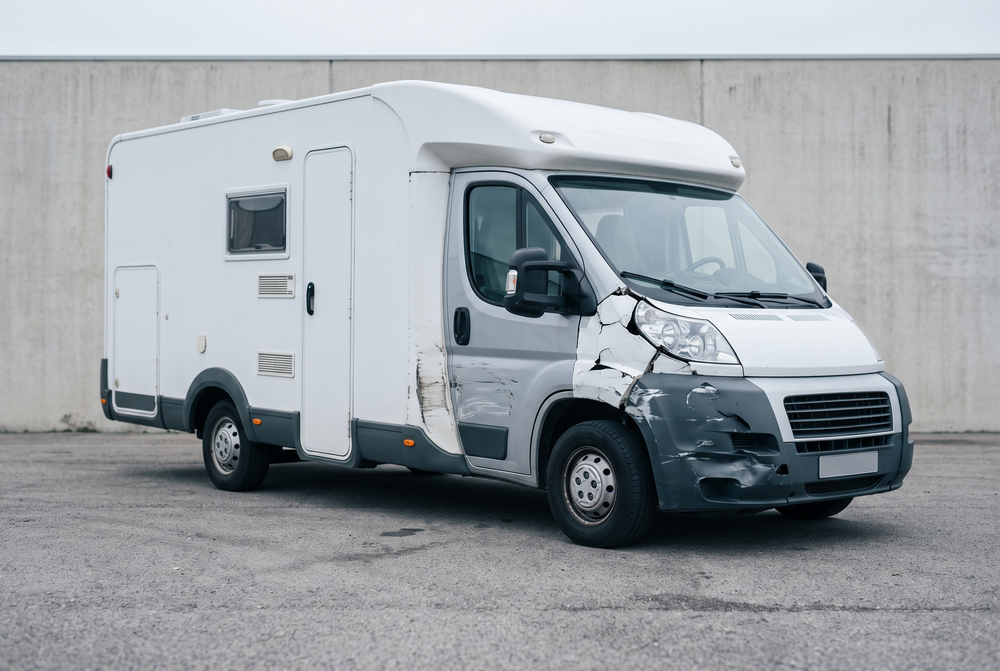
In a damage claim, a motorhome is two vehicles at once: underneath, a base vehicle with a chassis, drivetrain and sheet metal body; above it, a habitation structure of bonded sandwich panels with a complete living interior. The two follow entirely different construction methods, different repair logic and different price lists. Anyone who lumps them together will regularly underestimate the loss. We appraise motorhomes, camper vans, over-cab models, A-class motorhomes and travel trailers after an accident, drawing a clean line between chassis damage and habitation damage. You receive a signed appraisal report with which you can quantify your claims against the at-fault party's liability insurer in full – from the sheet metal damage through the destroyed interior fittings to the travel time lost.
✓Your right to choose your own expert – guaranteed by law
✓A personal contact, no waiting on hold
✓On site across Europe
✓Report usually within 24 hours of the inspection
What the appraisal report covers
-
Base vehicle: damage to the chassis, axles, steering, suspension and sheet metal parts, plus a measurement where the impact has reached the load-bearing structure.
-
Habitation structure: wall, roof and floor elements in sandwich construction, GRP outer skin, delamination, cracked bonded seams and distorted frame sections – recorded separately from the body damage and calculated separately.
-
Moisture: measurement at wall joints, seams, roof vents, windows, service hatches and floor edges, because an impact can open a seal without anything being visible from the outside.
-
Fittings and onboard systems: kitchen unit, washroom, seating group, beds, gas system, water installation, leisure battery, solar system and awning. The fittings have a value of their own and are often the more expensive part of the calculation after an impact, because distorted furniture assemblies and displaced lines can rarely be put right individually.
-
Travel trailers in particular: drawbar, overrun brake, corner steadies, coupling and chassis frame as separate inspection points, since there is no drivetrain here but the towing connection does lie in the load path.
-
Diminished value and values: replacement value and salvage value on the basis of the motorhome market, including the layout variant and optional equipment, plus the market-based diminished value.
-
Downtime: a realistic repair duration taking account of appointments at specialist habitation workshops and parts availability, plus the classification of the season as a basis for loss-of-use compensation or a replacement motorhome.
How it works
-
Appointment: you report the damage and we agree an inspection location – at the storage pitch, at the campsite, in winter storage or at the workshop, depending on whether the vehicle is still driveable.
-
Inspection: recording of chassis, habitation structure and interior, moisture measurement on the wall elements, photo documentation, and inspection of the fittings for function, mounting and hidden consequential damage behind panels.
-
Calculation: repair route and costs separated by base vehicle and habitation structure, because an automotive workshop and a habitation workshop apply different rates and different work steps, supplemented by values, diminished value and downtime.
-
Delivery: you receive the appraisal report digitally, as a rule on the same business day once it is complete. On request, a copy goes directly to the insurer and your attorney.
On the cost:
After a not-at-fault accident, the cost of the appraisal report is
generally borne by the liability insurer of the other party. On request
we bill that insurer directly, so that you do not have to pay up front.
Frequently asked questions
Why are the chassis and the habitation structure assessed separately?
Because they have nothing to do with one another. Body damage to the base vehicle runs on automotive flat rates and sheet metal work; the habitation structure runs on the wall, bonding and sealing work of a specialist workshop. Only a separate calculation lets the loss be justified to the insurer in a way that holds up.
Is moisture checked even when nothing is visible from the outside?
Yes, measuring the wall elements is standard practice for us. An impact can make a seam, a window or a roof vent leak without leaving a visible trace. Otherwise the consequential damage only shows months later, once the file has been closed.
Does downtime in the travel season count differently?
It is considered separately. A motorhome sitting in a workshop in July costs its owner a planned trip. We document the repair duration and the point in the season as a basis for loss-of-use compensation or for hiring a replacement motorhome.
Does the appraisal report also apply to travel trailers with no drivetrain?
Yes. On a travel trailer the drivetrain is absent, but we check the drawbar, overrun brake, coupling, corner steadies and chassis frame as separate points, since they lie in the load path of the impact. The habitation structure, moisture and fittings are recorded exactly as they are on a motorized vehicle.
More on this in our guide:
Who pays for the accident damage appraisal?